WUNDR
Social media for leaving your house
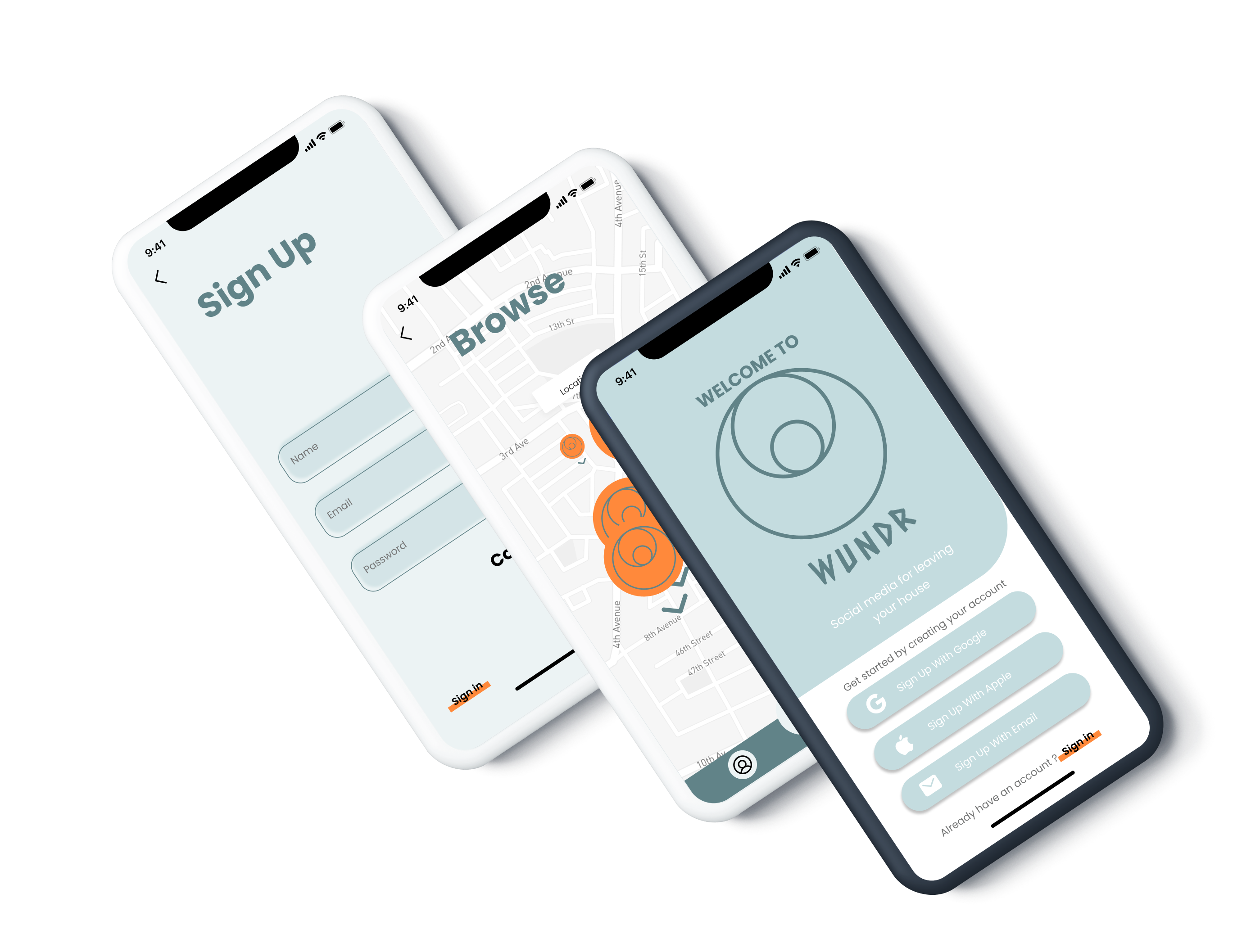
In today's ever-changing social environment, keeping up with social media can seem like an arduous task. I decided I wanted to reconsider the way we use social media and attempt to figure out ways to make it more applicable to emerging technologies in the hopes of creating a more active social experience.
I began this project with three distinct issues on mind. First, I wanted to somehow address the rising controversy surrounding social media. How might I create something that operates on a different level? I wasn't seeking out to create the next Facebook, I wanted a hybrid of something else. Secondly, I felt it was impossible to continue without also somehow addressing how media may change post-COVID. General interests have experienced a huge shift, and without knowing how things will turn out in the future, I wanted to create an experience that would be well-traversed but innovative. Third, while not immediately related to my first two problems, I felt there was space for more local stories. Living in the Twin Cities, I have loved forming strong opinions on who makes the best Juicy Lucy or the best hidden trails to walk along the Mississippi. I longed to find a place where these stories could live, where other residents near me could discuss or debate (the Juicy Lucy is a VERY hot topic around here). Ultimately, I decided to create something that would solve all three of these problems at once.
Enter: WUNDR. Reminiscing of a time when everyone was walking around playing Pokemon Go, I decided to create a social media that used location and AR to display content. Each post would be hinged on the location. I wanted to see what people thought when they walked past the 7th Kris Lindahl billboard in a row or ghost stories previous residents had in a new house I was moving to. I thus began with the tried and true user survey a la Google Forms to track the social media usage of other demographics so I could begin visualizing my scope.
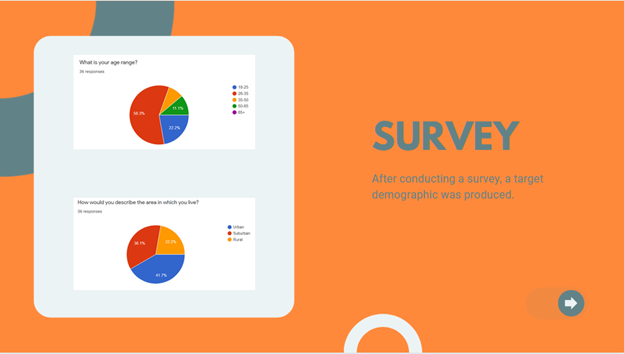
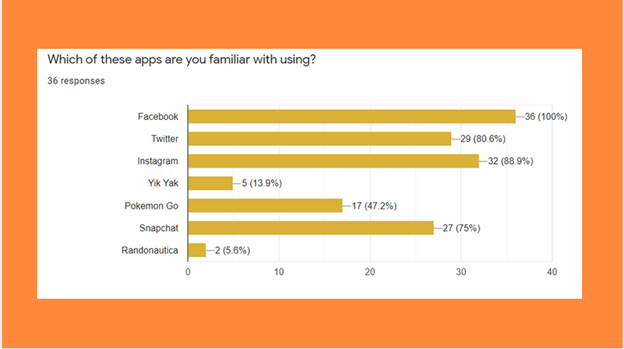
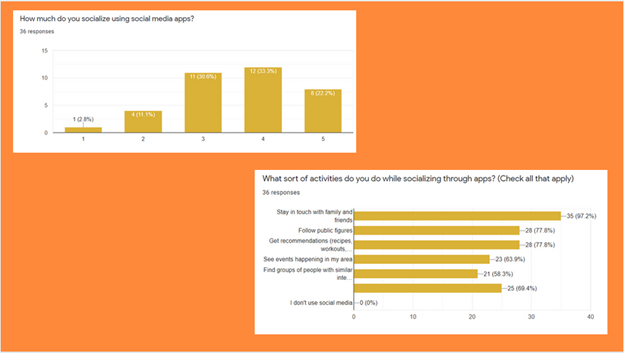
Initially, I asked demographic questions so I could compare that with the familiarity of my proposed components. That way, I could begin to narrow down a target age and location range. One of the main questions I deployed was asking what social apps users where already familiar with that may have components in WUNDR. The major social apps, like Facebook and Instagram, were almost universally known to users. That being said, I knew I didn't want to create a completely new mind map of what a social media app looked like. The innovation was in the purpose more so than the components. I also wanted to keep in mind what was still working with social media. Almost all of the people I surveyed frequently use social media to interact with other people, with particular interests staying in touch with already-familiar figures. This affirmed my idea to innovate with familiarity (local areas) by presenting them in a new format.
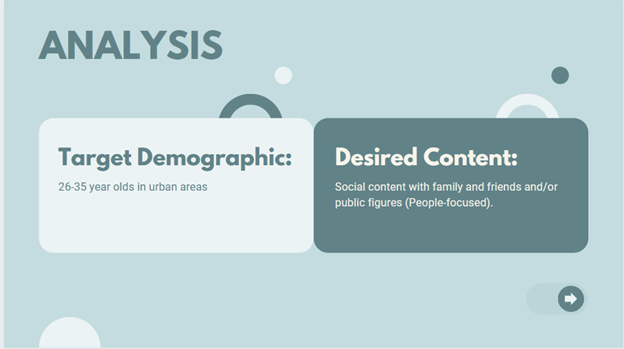
Now it was time to analyze my results to pinpoint my demographic. Since I was completing this project from start to finish on my own, I spoke with my mentor and peers about emerging technologies that may be interesting to include, such as AR. This made me further consider apps like Pokemon Go or Memojis, and AR might be implemented within social media. To start with, I completed a competitive analysis of Facebook, the most familiar social media according to my survey, and Pokemon Go, an example of successful AR implementation.
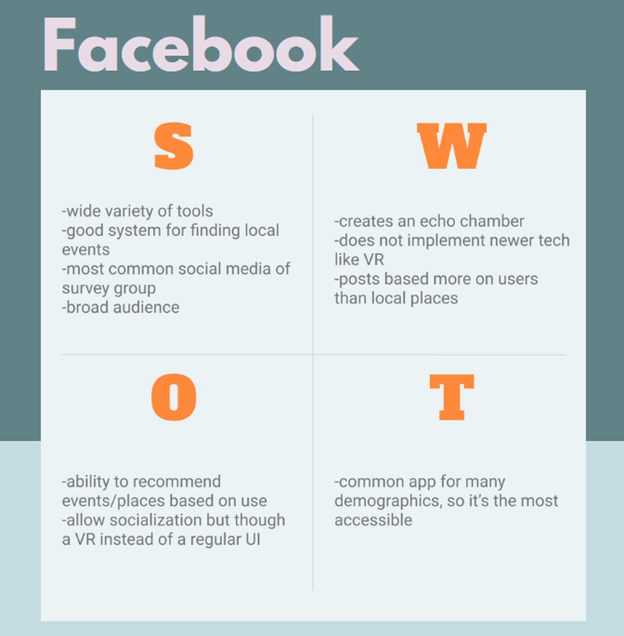
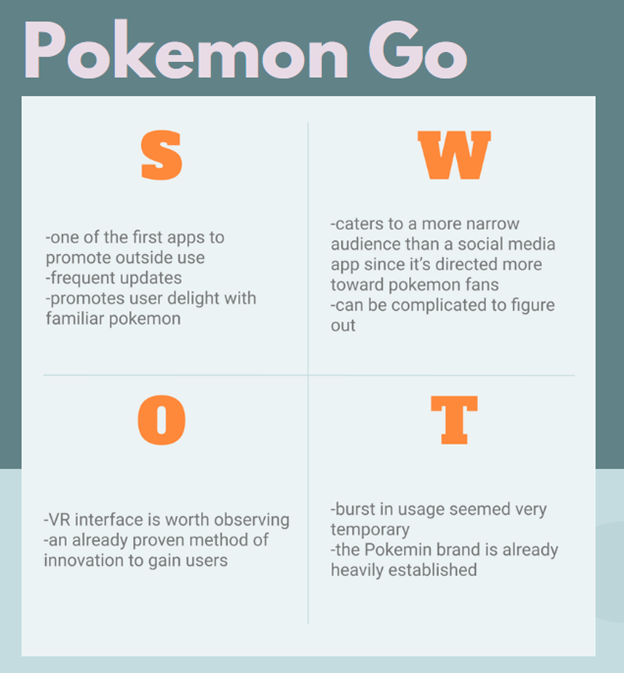
For these analyses I used the SWOT method to identify the strengths, weaknesses, opportunities, and threats present in each. This analysis provided the framework for what features where necessary for WUNDR as well as which ones were the most plausible. Considering this information along with my survey results, I synthesized that data into three personas.
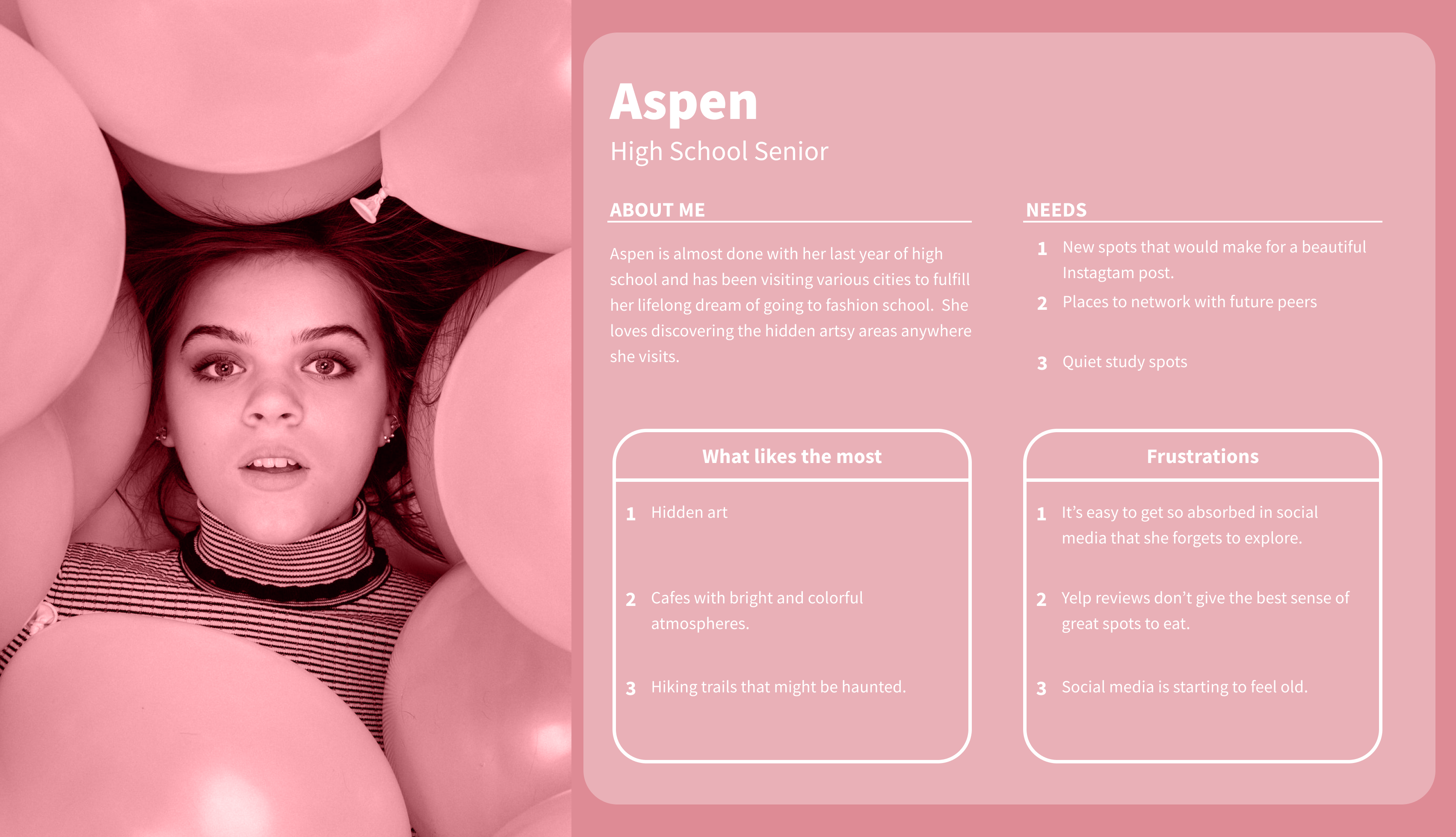
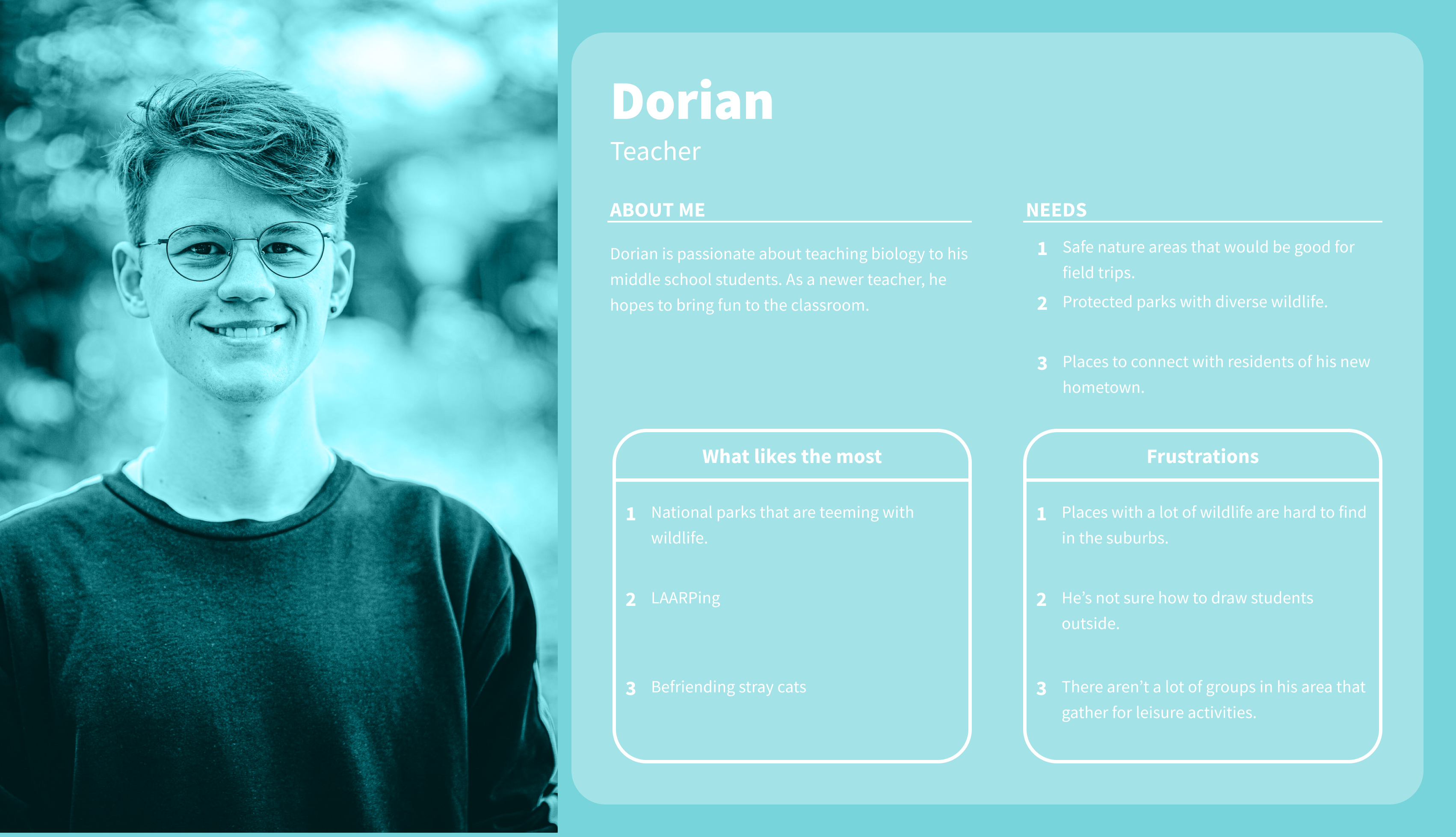
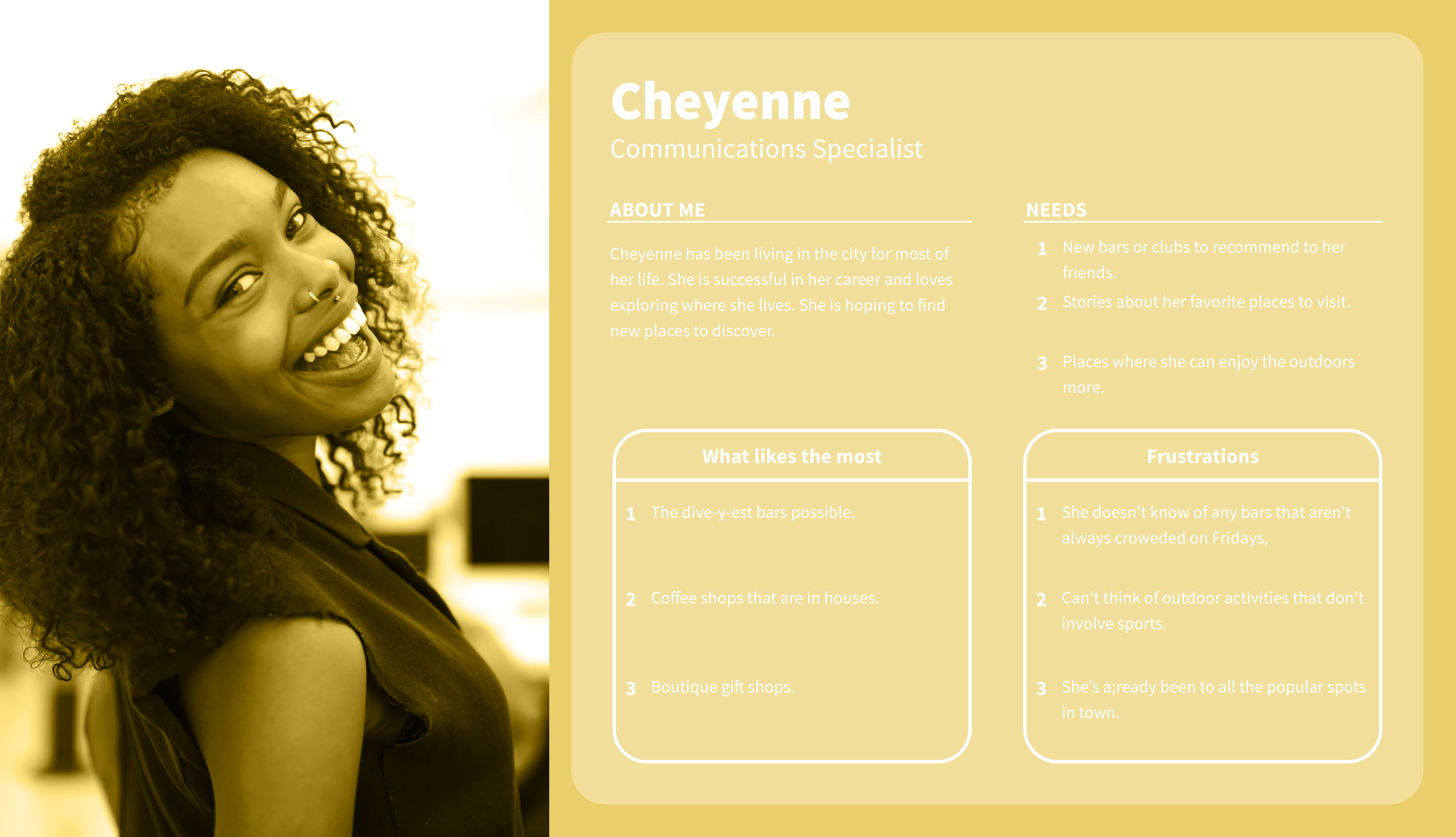
These personas fell into my target demographic, and helped me visualize the users I was designing for. By keeping these personas in mind, I could speculate what their experience might be.
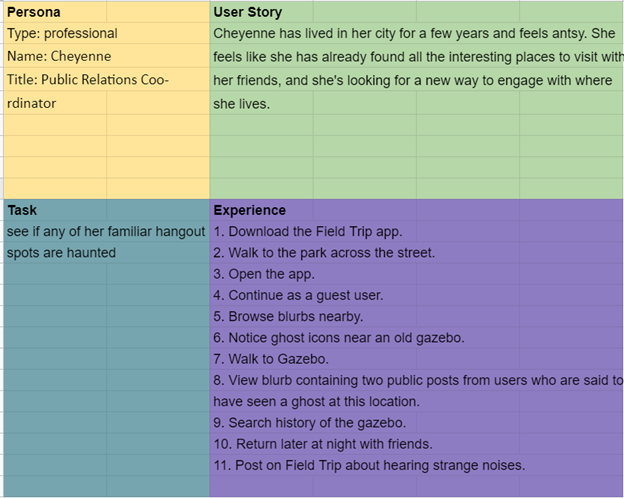
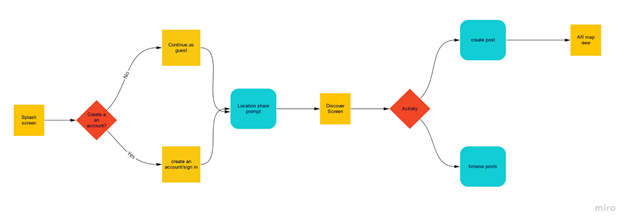
This allowed me to create user stories and user flows, which gave a more concrete image of the exact screens I might need such as the onboarding process, settings, privacy, etc. This process was essential to begin fully visualizing what WUNDR would look like.
This allowed me to create user stories and user flows, which gave a more concrete image of the exact screens I might need such as the onboarding process, settings, privacy, etc. This process was essential to begin fully visualizing what WUNDER would look like.
Through multiple iterations and lot of tinkering with Figma, I had a testable prototype. Using Maze, I got real time results from some of my survey takers to identify any issues I may have overlooked. I mostly assigned the users different tasks to complete that I had outlined in my user flows, but I also asked an open ended question to gauge users' overall thoughts.
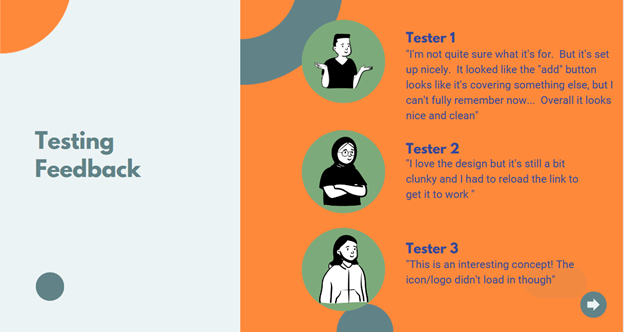
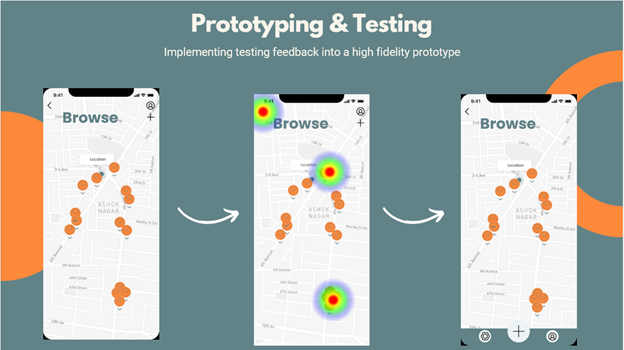
From that feedback, I knew I still had many changes to implement to increase usability. Combining these quotes with the quantitative feedback of heat mapping and misclick rates, I implemented changes on a more molecular level.
For example, when I asked users to create a post in the app, there was an almost 70% misclick rate. I intended for users to click the little plus sign in the upper right corner, but that was not clear enough for users. Using those results, I instead created a toolbar that would provide those options in a more familiar way.
I learned so much about user research throughout the entirety of this process. I found it very fulfilling to take feedback and use it to create results that were clear and helpful for users. Having users test the prototype itself was one of the most significant insights for this project, and it is definitely something I will continue to use in future projects. I believe that research is useful in every stage of the process, and I hope to do even more testing with higher fidelity prototypes of this project. Eventually, I will conduct research based on the familiarity with AR and use those results to further amplify this project.